
Why Is Retinol Yellow? The Science Behind the Colour

What You'll Learn in This Guide
Retinol's yellow colour is one of the most misunderstood aspects of skincare. This guide explains the scientific reason behind retinol's natural yellow appearance, how to differentiate normal colour from oxidation, and addresses common concerns about whether retinol affects skin pigmentation. You'll discover when yellow colour indicates quality versus problems, and explore INKEY's new retinol formulations designed for different experience levels.
Understanding why retinol is yellow isn't just academic curiosity—it's practical knowledge that helps you identify quality products, avoid unnecessary concerns about "spoiled" skincare, and make informed decisions about your routine. INKEY's new retinol range—including the gentle Starter Retinol and potent Advanced 0.2% Retinal—are naturally yellow, indicating their high-quality vitamin A content.
The Quick Answer: Vitamin A Naturally Reflects Light
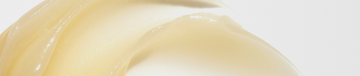
In our recent Instagram post, we explained: "Why are retinoids yellow? Because vitamin A naturally reflects light." This isn't a sign of poor quality or oxidation—it's exactly what high-quality retinol should look like. The yellow colour comes from retinol's molecular structure, specifically its system of conjugated double bonds that interact with light in a way that produces the characteristic golden hue.
When skincare enthusiasts worry about their retinol "turning yellow," they're often observing normal behaviour rather than product degradation. This golden colour is as normal for retinol as green is for chlorophyll or red is for lycopene—it's an intrinsic property of the molecule itself.
The Science: How Retinol's Molecular Structure Creates Yellow Colour
Retinol belongs to a class of compounds called retinoids, all derived from vitamin A. The key to retinol's colour lies in its conjugated double bond system—five connected double bonds arranged in an alternating pattern along its carbon chain. This creates what chemists call an "extended π-electron system."
When light energy encounters this conjugated system, it causes electrons to become excited and jump to higher energy levels. The specific wavelengths that can excite these electrons correspond to the violet and blue portions of the visible spectrum. Since these wavelengths are absorbed rather than reflected, our eyes perceive the complementary colours—yellows, oranges, and golds.
According to research published in Chemistry LibreTexts, retinol's absorption peak occurs around 325 nanometers in the UV range, with significant absorption extending into the visible violet region (400-440 nm). This explains why retinol appears yellow rather than colourless—the molecule is selectively filtering out violet and blue light while allowing yellow, orange, and red wavelengths to reflect back to our eyes.
The conjugated system that creates retinol's colour also contributes to its biological activity. This electron delocalisation is crucial for retinol's ability to interact with cellular proteins and trigger the biochemical cascades that improve skin cell turnover and collagen production.
|
Retinol Type |
Colouration |
Texture |
Odour |
Quality Indicator |
|
Natural Yellow Retinol |
Consistent, even yellow throughout |
Smooth, uniform without particles |
No unusual chemical smell |
High quality - normal appearance |
|
Oxidised Retinol |
Brown, amber, or dark orange progression |
Thick, gritty, visible particles |
Rancid or unusual chemical odours |
Degraded - should be discarded |
Will Retinol Make My Skin Yellow? Debunking the Staining Myth
The simple answer is definitively no—retinol will not make your skin yellow. The yellow colour you see in retinol products is a visual property of the molecule in concentrated form, but it has absolutely no relationship to skin pigmentation or staining potential.
When retinol is applied to skin, it doesn't sit on the surface like a dye; instead, it penetrates into deeper layers where it undergoes biochemical conversion. According to research published in the NIH's PMC database, retinol undergoes oxidation reactions within skin cells, transforming into retinal and then retinoic acid. This metabolic pathway transforms the retinol molecule completely, eliminating any trace of the original yellow-coloured compound.
This biological conversion is radically different from how actual staining agents work. True skin stains come from substances that bind permanently to skin proteins or penetrate so deeply they resist normal cellular turnover. Retinol operates through an entirely different mechanism, triggering cellular processes that actually improve skin appearance over time—often resulting in more even, brighter skin tone.
INKEY's New Retinol Range: What to Expect from Yellow Formulations
INKEY List has recently launched an innovative retinol collection that perfectly exemplifies how natural yellow colouration indicates quality and potency in vitamin A skincare. The range features two distinct formulations—the Starter Retinol and the Advanced 0.2% Retinal—each designed for different experience levels while maintaining the characteristic golden colour that signals genuine retinoid activity.
The Starter Retinol represents INKEY's approach to making retinoids accessible for beginners. This gentle introduction features a slow-release delivery system that minimises irritation while still providing clinically proven results. The product's pale yellow appearance reflects its carefully calibrated concentration, designed to deliver benefits without overwhelming sensitive skin.
The Advanced 0.2% Retinal takes a different approach, featuring retinaldehyde rather than traditional retinol. This distinction is crucial for understanding why the Advanced formula appears more vibrantly yellow. Retinal is one step closer to retinoic acid in the skin's metabolic pathway, meaning it converts to the active form approximately 11 times faster than standard retinol. This enhanced bioavailability explains both the deeper golden colour and the more rapid results users typically experience.
The colour intensity difference between these products provides an excellent example of how retinoid concentration and potency correlate with visual appearance. The Starter Retinol's subtle yellow hints at its gentle approach, while the Advanced Retinal's pronounced golden colour reflects its higher concentration and faster-acting formula. Both products blend seamlessly into skin without leaving any residual tint, proving that retinol's yellow appearance is truly molecular rather than superficial.
FAQs About Retinol Colour
Q: Should all retinol products be yellow?
Not necessarily, but many high-quality retinol products will display some degree of yellow colouration. Pure retinol in its crystalline form is naturally pale yellow, so concentrated serums and oils often reflect this inherent colour. However, some formulations use encapsulation technologies or mixing with other ingredients that can modify the visual appearance without affecting efficacy. The absence of yellow doesn't automatically indicate poor quality, but its presence is generally a positive sign.
Q: Can I still use retinol that has gotten more yellow over time?
This depends on the type of colour change. If your retinol has gradually shifted from colourless to pale yellow, or from pale yellow to slightly more golden, this is likely normal ageing that doesn't significantly impact effectiveness. However, if the product has progressed toward brown, amber, or dark orange hues, especially with texture changes or unusual odours, it may be experiencing oxidation that could reduce potency.
Q: Will yellow retinol stain my skin?
Absolutely not. Retinol's yellow colour is a molecular property that disappears completely upon application as the ingredient penetrates and converts within skin cells. The colour you see in the bottle has no relationship to skin pigmentation or staining potential.
Q: Why does my retinol look different from my friend's, even though it's the same product?
Storage conditions play a major role—products kept in cool, dark environments may appear paler than those stored in warm, bright locations. The age of the product, manufacturing batch differences, and even individual colour perception can create variations. Different lighting conditions can also make the same product appear different to different people.
Q: Is yellow retinol stronger than clear retinol?
Not automatically. Whilst natural retinol does have a yellow tint that often correlates with concentration, many other factors influence both colour and strength. Some manufacturers deliberately process retinol to appear clearer for cosmetic reasons without reducing potency. The most reliable way to assess retinol strength is by checking the percentage listed on the product label, not by visual appearance alone.
Conclusion: Embracing the Golden Standard
Understanding why retinol is yellow transforms what many perceive as a potential problem into a powerful indicator of quality and authenticity. The golden colour that appears in high-quality retinoid formulations isn't a manufacturing flaw or oxidation concern—it's the natural result of vitamin A's sophisticated molecular architecture working exactly as intended.
The science behind retinol's colour reveals conjugated double bonds and light absorption principles that extend throughout the natural world. When you see that characteristic yellow tint in your retinol serum, you're witnessing the same molecular principles that create countless natural pigments. This connection to fundamental chemistry should inspire confidence rather than concern.
Debunking the myths around retinol colour opens the door for more people to experience the transformative benefits of vitamin A skincare. Armed with scientific understanding, consumers can make informed decisions based on evidence rather than misconceptions about yellow colouration, staining fears, or oxidation concerns.
INKEY's approach to retinol formulation exemplifies how modern skincare science embraces rather than masks the natural characteristics of effective ingredients. Their Starter Retinol and Advanced 0.2% Retinal demonstrate that superior formulation science enhances vitamin A's inherent properties, creating products that are both scientifically sophisticated and visually authentic.
Ready to experience the benefits of scientifically formulated, naturally yellow retinoids? Discover INKEY's innovative retinol collection, where authentic colour meets proven results. Whether you're starting with the gentle Starter Retinol or ready for the advanced potency of 0.2% Retinal, you'll be investing in products that honour both the science of vitamin A and the intelligence of informed consumers who understand that when it comes to retinol, yellow means quality.

Advanced 0.2% Retinal Serum
Key Benefits:
11x faster than traditional retinol
Smooths wrinkles and fades dark spots in 1 week
Visibly firms and improves skin texture
Advanced retinal technology for experienced users
Key Ingredients:
• 0.2% Retinal (Retinaldehyde) – Advanced vitamin A derivative that works faster than retinol
• Skin-Supporting Complex – Minimizes irritation while maximizing results
Suitable For: Experienced retinol users, all skin types
What our customers say: "After 2 weeks, I am starting to see visible results. My dark spots are starting to disappear and my fine lines are a little smoother. It definitely works! Can’t wait to keep using and seeing more results for the upcoming weeks." - Vuri

Exosom-Hydro-Glow-Komplex
Key Benefits:
Gentle formula perfect for beginners and sensitive skin
Clinically proven results in just 7 days
2x more effective than standard retinol**
Smooths fine lines without irritation
Key Ingredients:
• Advanced Retinol Complex – Delivers effective anti-ageing results with minimal irritation
• Hydrating Actives – Support skin barrier health during retinol introduction
Suitable For: All Skin Types, especially beginners and sensitive skin
What our customers say: "Great starter retinol serum, I've used since end of November twice per week. It works for my dry, sensitive skin. Did not irritate my face. Will continue to use it. So far my forehead looks more smooth than before." - Mel
More Skincare articles
Alle anzeigen


Back Acne Treatment: How to Get Rid of Body Acne


Retinol Myth-Busting: Does Expensive Mean More Effective?

Retinol Myths Busted: Why Higher Percentage Doesn’t Equal Better Results

Smart Skinimalism: How to Build a Simple Skincare Routine That Actually Works

PDRN vs Retinol: Two Approaches to Skin Regeneration

Exosomes Explained: Your Skin’s Cellular Text Messages


